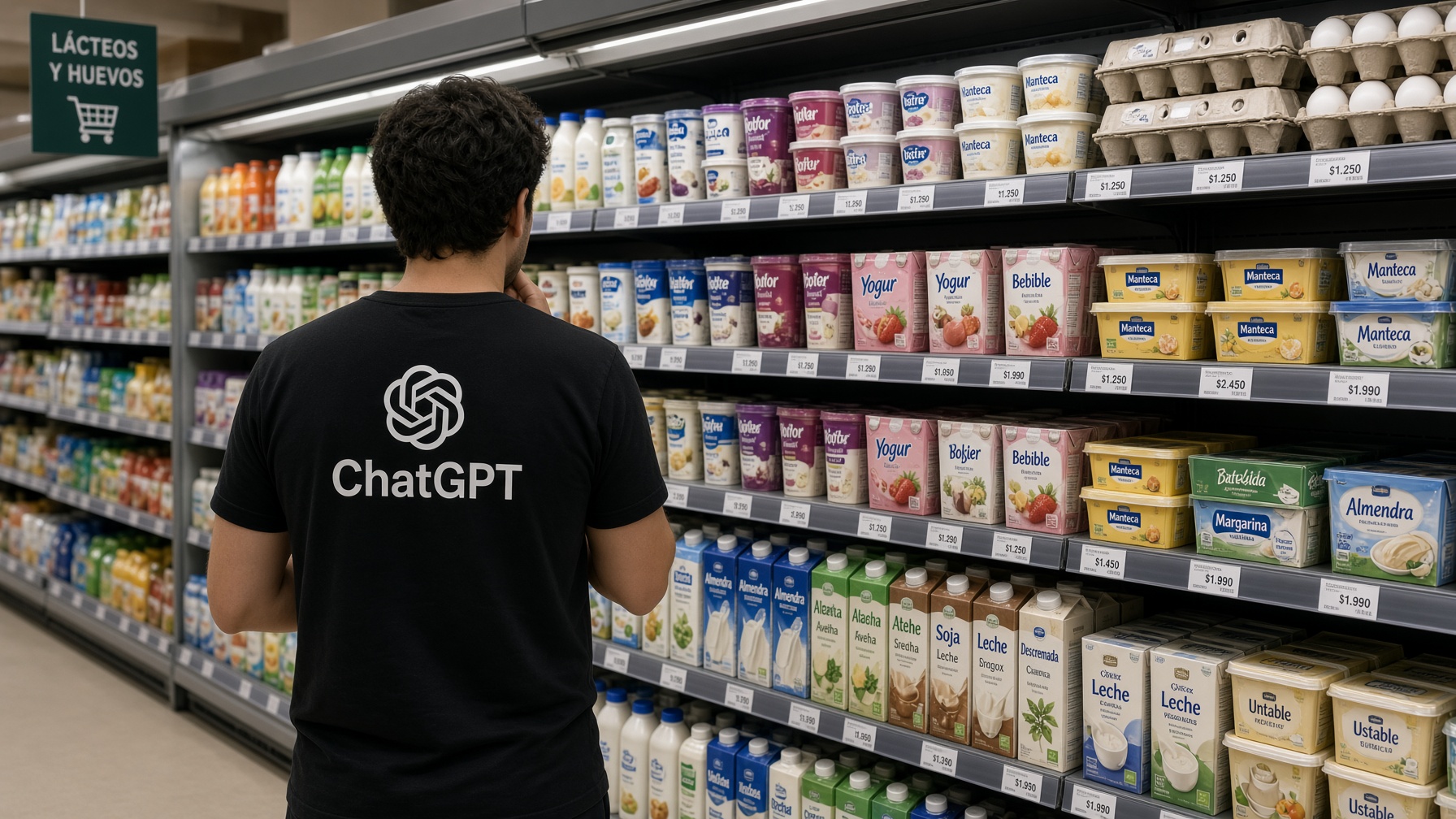

Recently Walmart announced something that looks like a technical detail on the surface but is actually a fundamental shift. They integrated their catalog inside ChatGPT so AI can complete single-product purchases without the user ever leaving the chat.
Walmart CEO Doug McMillon called it the end of an era. For years, online commerce was a search bar followed by a long list of results. That logic is changing toward something multimedia, personalized, and contextual.
Target is heading in the same direction. OpenAI had already put Etsy and Shopify inside ChatGPT through its Instant Checkout feature. All of this has a name you're going to hear more and more: agentic commerce.
What It Actually Means
A chatbot answers your questions. An AI agent makes decisions and acts on them. That's the core difference.
Agentic commerce is the model where an AI agent searches, compares, recommends, and in some cases purchases on behalf of a person — with minimal human involvement.
The Numbers That Confirm It's Not a Trend
Searches for "agentic commerce" grew 464% year-over-year.
AI referral traffic to retail sites in the United States increased 393% year-over-year in Q1 2026. In March alone, the jump was 269%.
And the number that matters most: buyers arriving through AI referrals convert better than traditional traffic. Higher conversion, higher revenue per visit, more time on site. It's not curiosity traffic — it's purchase-intent traffic already filtered by the agent before it reaches your site.
Examples That Are Happening Now, Not Later
- Walmart integrated Instant Checkout with OpenAI for single-product purchases, with plans to expand to full carts.
- Target is building a conversational discovery and curation ecosystem.
- Etsy and Shopify already allow orders to be placed directly from ChatGPT in the United States.
- OpenAI and Stripe launched the Agentic Commerce Protocol, a standard for any store to connect to Instant Checkout.
What Changes for Brands
If an agent is choosing for the user, the competition is no longer about who ranks first on Google. It's about who the agent selects when building its response or executing a purchase.
Brands will need to add something new. The industry is already calling it "agent-to-business" marketing: content and data designed for another AI system to understand, trust, and choose your product.
How to Prepare
1. Structured data. An agent doesn't read a beautiful landing page — it reads metadata, product specs, updated prices and availability in a format it can process without ambiguity.
2. Semantic authority. A purchasing agent doesn't invent trust — it builds it from external signals: reviews, media mentions, consistency between what you say about your brand and what third parties say about it.
3. Speed of adoption. Brands that get in early and organize their infrastructure now will have an advantage over those that wait for things to "mature." By the time things are mature, the spots will be taken.
Want to know how an AI agent is seeing your catalog today? Let's talk.