
By Daniel Antúnez, founder of RomaLatam
The latest Forbes ranking of entertainment fortunes dropped a number worth looking at closely: 22 American celebrities have now crossed the 1 billion dollar net worth mark, adding up to 48.1 billion dollars combined. Last year there were 18, with 39 billion combined. The club is growing, and growing fast.
The names and the money
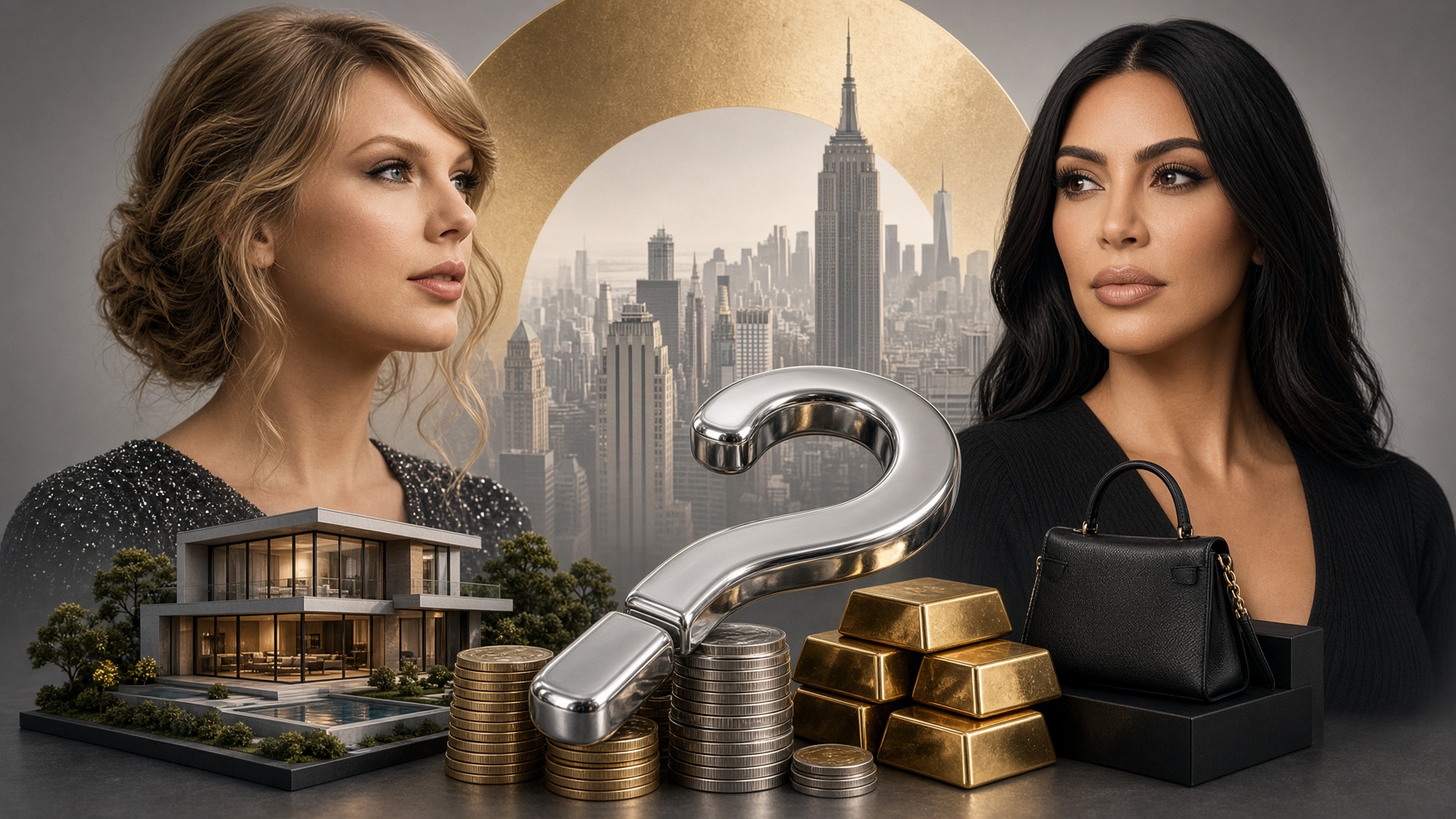
Taylor Swift officially joined the club with 2 billion dollars, combining income from The Eras Tour, her music catalog rights, and a real estate portfolio now worth close to 100 million dollars. Jay-Z surpasses her with 2.8 billion, built largely on premium beverage businesses. Kim Kardashian reached 1.9 billion almost entirely thanks to Skims, her apparel brand, valued at 5 billion dollars by private investors.
Bruce Springsteen and Arnold Schwarzenegger each reached 1.2 billion, backed by catalog sales and successful investments. Beyoncé joined this year with 1 billion, between tours, fashion investments and art.
The pattern that repeats across every case
None of these names built their primary fortune from acting, singing or playing sports fees. Every single one diversified into their own businesses: real estate, apparel brands, intellectual property catalogs, equity stakes. The artistic career was the entry point into public attention. The real business got built afterward, using that attention as a platform.
It's the exact same logic we keep coming back to on this blog with other cases: fame is an asset that can be capitalized in many ways, but only if there's a conscious decision to build something beyond the traditional endorsement deal.
Why this matters to any brand, not just people who follow these celebrities
When a figure at the scale of Taylor Swift or Kim Kardashian moves capital into real estate or into their own brand, it doesn't just generate a headline. It generates a replicable case study, at a smaller scale, for any professional or business that wants to think of their own reputation as a capitalizable asset, not as an end in itself.
Three paths that repeat the most toward that kind of fortune
Real estate as a store of value
Taylor Swift isn't the only one. Most of these names hold a significant portion of their net worth in property, not as short term speculation, but as a stable store of value that grows while the artistic career keeps generating income elsewhere.
Owned consumer brands
Skims, in Kim Kardashian's case, is the clearest example of this path: taking public attention and turning it into a real consumer brand, with its own operations, distribution and valuation independent of its founder's fame.
Catalogs and intellectual property
Jay-Z and Bruce Springsteen show another path: monetizing the catalog built over years of a career, selling rights or stakes that generate recurring income long after the original song stopped playing on the radio.
What not to copy from this model
It's worth clarifying something before this starts sounding like a magic formula. None of these cases were built overnight, and all of them started from a level of public exposure most businesses will never have. The useful lesson isn't buy property and launch a brand, it's the underlying logic: don't depend on a single income source tied directly to your main activity, and use the reputation you've built as a platform for other businesses.
The number that sums it all up
Compared to the year before, the number of billionaire celebrities went from 18 to 22 in just twelve months, and combined net worth rose from 39 billion to 48.1 billion dollars. That growth rate isn't explained just by each person's artistic success, it's explained by the growing number of public figures treating their fame as the starting point of a business, not as the business itself.
The final takeaway
None of these fortunes were built by accident. Each one is the result of a strategic decision, made at some point in the career, to stop depending exclusively on the activity that generated the initial fame. That decision, more than artistic talent itself, is what ends up separating those who earn well while their career is active from those who build wealth that keeps growing long after.
Daniel Antúnez is the founder of RomaLatam, an agency specialized in brand positioning and optimization for generative engines (GEO).