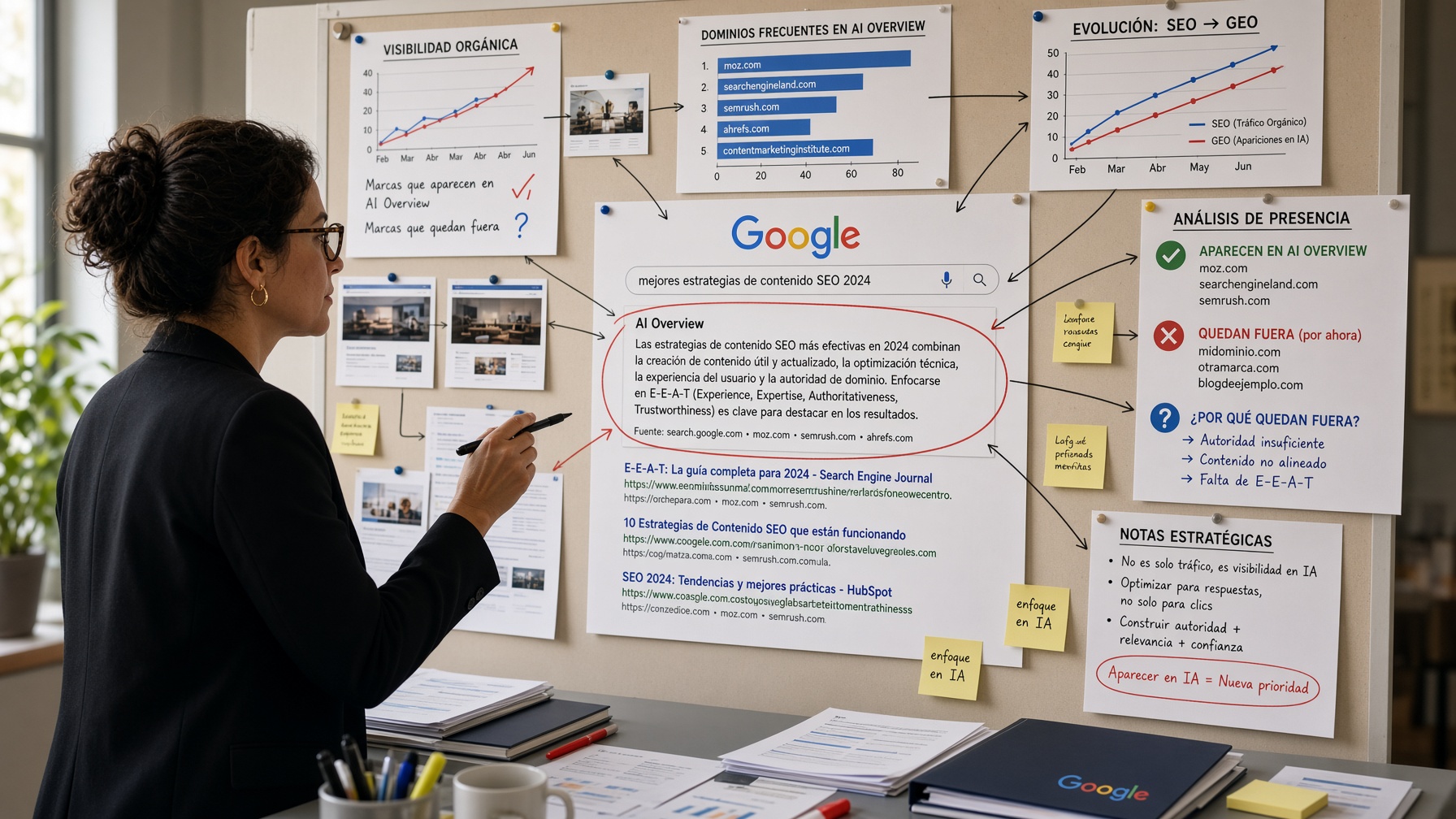

For twenty years the formula was simple. Rank high on Google, people visit your site, those people become customers. Better position, more traffic, more business.
That formula broke — and it broke faster than almost anyone is willing to admit.
The Number That Changes Everything
The Reuters Institute / Chartbeat January 2026 report measures this with uncomfortable precision. Google search traffic to editorial sites fell 33% globally in the year through November 2025. In the United States, the drop was even steeper: 38%.
Google Discover traffic to those same sites fell 21%.
And here's what surprises people most: ChatGPT grew over 200% as a referral source — but that growth still represents less than 1% of total site traffic. Chatbot traffic doesn't compensate, not even close, for what's being lost from traditional search.
Projections for 2029 point to a median 43% drop in search traffic for news publishers.
Why This Is Happening
Google rolled its AI Overviews — AI-generated summaries that appear above traditional results — into an ever-larger share of searches. They now appear in 18% of all queries and 57% of long-tail searches.
The effect is direct. When an AI Overview appears, the click-through rate to any site drops from 15% to 8%. A number-one position that once guaranteed 20–30% of clicks on a competitive keyword now delivers 8–12%.
This Isn't Just a Publisher Problem
It's tempting to think this only affects news sites. It doesn't. Any business that depends on organic traffic to acquire customers is feeling the same pressure — often without understanding why.
One widely-cited public case: HubSpot saw its organic traffic fall from 13.5 million monthly visits to under 7 million in a single month. Their own CEO acknowledged it: AI Overviews are answering questions, and fewer people click through to the site.
What This Doesn't Mean
It doesn't mean search is dead. Google still drives roughly 40% of all internet traffic. Nobody should abandon their SEO strategy overnight.
What it does mean is that the goal has changed. Visibility and traffic are no longer the same thing. You can be mentioned, recommended and chosen by an AI without that translating into a click. And that mention still builds brand, trust, and eventually, business.
What To Do About It
1. Measure what you weren't measuring before. If you're only looking at Google Search Console, you're seeing a shrinking slice of the full picture.
2. Write to be cited, not just found. Models favor clear, well-structured content with verifiable data and demonstrable authority over pages optimized purely for conversion.
3. Build authority outside your own site. Media mentions, reviews, consistency between what you say about yourself and what others say about you — all of this weighs more every day.
4. Stop thinking only about Google. ChatGPT, Gemini, Perplexity and Claude each have different logic for deciding who to cite.
At ROMA we always start with a diagnosis of how each relevant AI model sees your brand today, then build a plan combining semantic content, institutional authority, and distributed presence across multiple channels. Want to know where you stand? Let's talk.