
For decades the question was simple. Did you go to the show or not? You were there, in the stadium, or you missed it and were left looking at other people's photos the next day. That line, so clear for so long, is fading fast.
What's happening
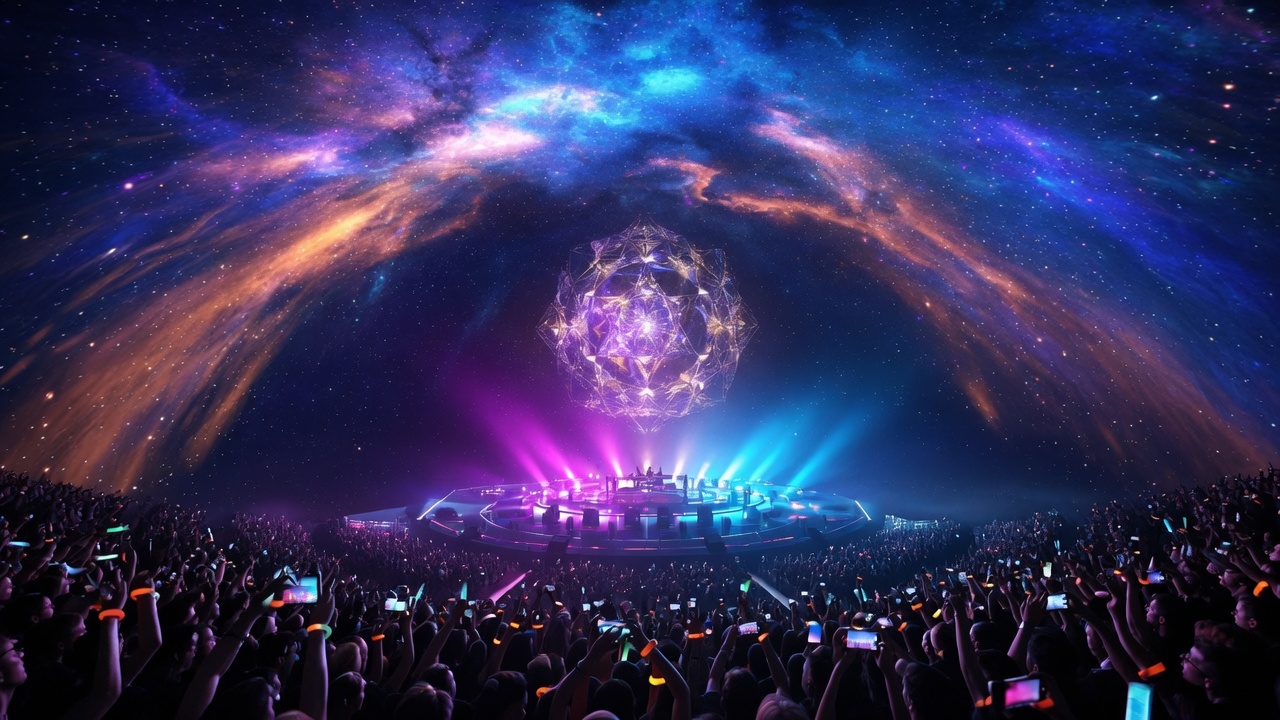
The entertainment industry has been building a format that combines, within a single experience, an in-person layer, a live digital layer, and a narrative told across social media almost like a series, with chapters, anticipation and follow-up between one date and the next.
This isn't just about streaming a show for those who couldn't get tickets. It's about designing the entire experience around three distinct, complementary audiences: the one physically present, the one participating in real time through a digital platform with its own dynamics, and the one following the story afterward, through clips, recaps and content narrated on social media.
Why this isn't simply "streaming under a new name"
The core difference is in the design. Traditional streaming is a camera pointed at the stage, trying to replicate the in-person experience as closely as possible. The hybrid format taking shape now is something else entirely: each layer of the experience (in-person, digital, narrated) is designed with its own logic, not as a scaled-down version of another.
Someone following the show through the digital platform might get access to camera angles, interactions or exclusive content not even available to those physically present. And someone only following the narrative on social media can feel part of the story without watching a single second of the live show.
Why this is happening right now
Three factors converged to speed this up. The first is technological. Live broadcast quality, digital interactivity and real-time editing and publishing tools reached a point where designing these three layers simultaneously stopped being prohibitively expensive.
The second is generational. Much of the younger audience already builds its relationship with music and entertainment through narrated fragments on social media, more than through the full, linear experience.
The third is economic. A well designed hybrid format allows brands to simultaneously monetize in-person tickets, digital access and different sponsorships for each layer of the experience.
What this means for sponsoring brands
Sponsoring a show no longer just means buying a logo on a stage or a screen. It means choosing which layer of the experience you want your brand to show up in, and designing a different presence for each one.
A brand can have traditional physical presence at the in-person event, an exclusive interactive activation within the digital experience, and a narrative integration within the content told on social media afterward. That's three distinct brand opportunities within the same event, with audiences that in many cases don't even fully overlap.
Brands still thinking of show sponsorship as "a logo on the stage" are leaving a big chunk of the real value this format offers on the table.
The risks of jumping into this trend the wrong way
Not every brand needs to be present in all three layers, and forcing it usually backfires. A poorly designed digital activation, treated as just a smaller version of the in-person one, ends up feeling like a consolation prize rather than its own experience.
The key, once again, is the same one that shows up in almost any well thought out marketing strategy: choosing with intention where it genuinely makes sense to show up, instead of trying to be everywhere just for the sake of it.
How to think about a sponsorship strategy within this new format
Define first which audience within the experience you're speaking to. Designing for someone physically present isn't the same as designing for someone participating live through a digital platform, or for someone who'll only get to know your brand through the narrated content afterward.
Prioritize narrative coherence over sheer presence. A single, well thought out integration within the event's narrative usually generates more recall than a shallow presence across all three layers at once.
Measure each layer separately. Success metrics for an in-person activation, a digital one, and a social media narrative are different from each other. Measuring all three with the same criteria leads to wrong conclusions about what worked and what didn't.
The bigger picture
This hybrid format isn't a passing fad in the entertainment industry. It's the logical consequence of an audience that already lives a hybrid life between the physical and digital worlds in practically every aspect of their lives. Brands and artists who understand this early aren't just jumping on a trend, they're aligning how they communicate with how their audience already lives.