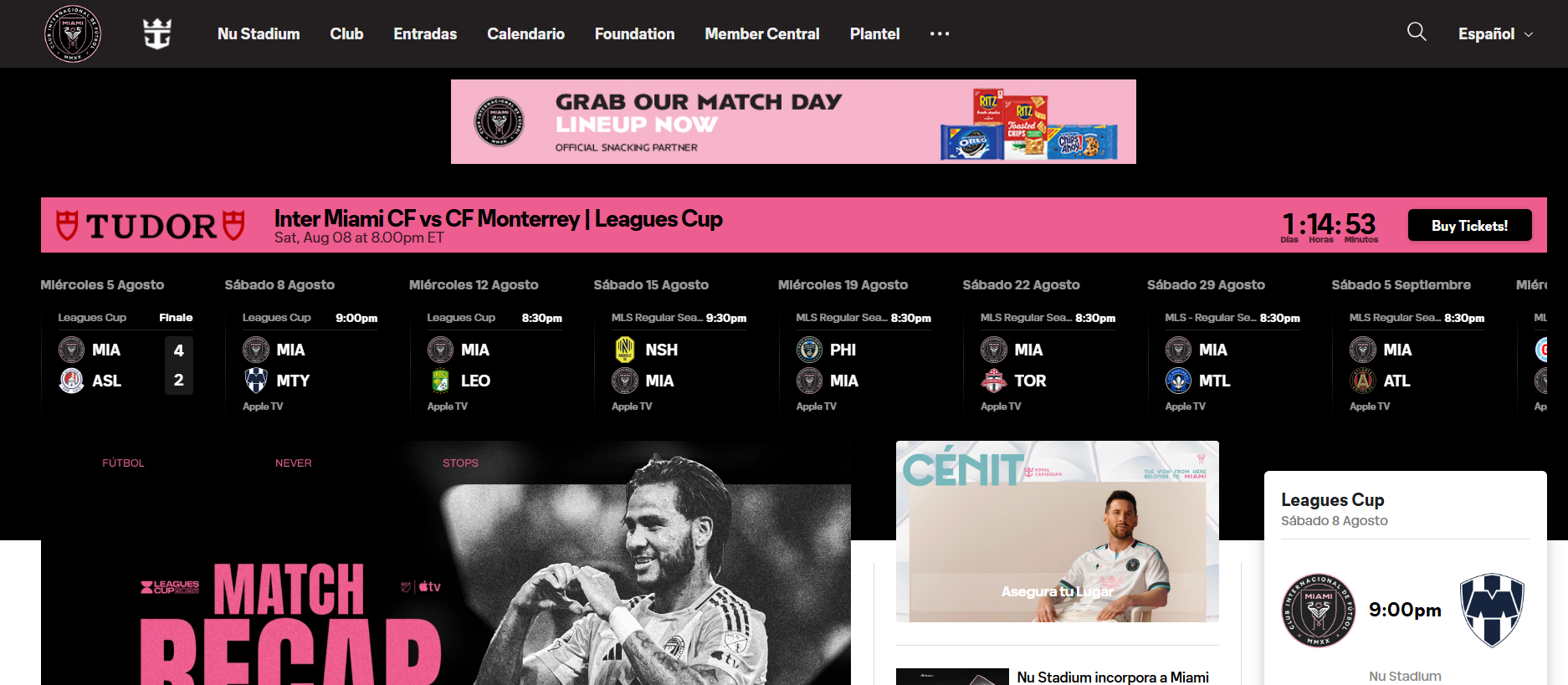

The Inter Miami case shows why load testing, checkout and crisis communication are also part of marketing.
The second layer of the case
During a globally watched match, Inter Miami's official website stream crashed at peak attention. The club also used dynamic pricing to capture Messi-driven demand, but that model depended on infrastructure capable of handling the load.
Why it can happen to any business
You do not need a global audience. A launch, Black Friday campaign, ticket sale or major media mention can create a short demand spike that a normal website is not ready to receive.
What almost nobody tests
It is not enough to check that pages load. You need to test simultaneous traffic, checkout, forms and streaming when relevant. The highest-risk point is often the action that turns attention into a sale or lead.
How to prepare
Identify your own peak-demand moment, load test ahead of time and prepare a communication fallback. Infrastructure is not separate from marketing: a successful campaign is also a technical demand.
The underlying lesson
Every lost lead during a spike cost real money in advertising, content and PR. Protecting the digital experience is part of capturing the value of the attention marketing created.
Conclusion: A campaign can generate demand, but the digital infrastructure has to be ready to receive it.