Today Mark Zuckerberg published a 6,500-word piece on Meta’s website titled “The Future Is for Everyone”. It is not a press release but a philosophical and strategic manifesto positioning Meta against OpenAI’s and Anthropic’s views of how artificial intelligence should develop.
The underlying debate
The question splitting the industry is simple: should advanced AI remain controlled by a handful of companies, or should it be available for anyone to use, modify and adapt?
OpenAI and Anthropic have bet, to different degrees, on proprietary systems with strict controls. Meta has taken the other side: open source, broad access and the conviction that concentrating AI power in a few hands is “inherently problematic”.
The product launched alongside the manifesto
That same day Meta released Glimmer, a 30-billion-parameter open model designed to run on personal computers rather than depend on data-center power. The combination of philosophy and product is calculated positioning: competitors build advantage through closed paid models, while Meta is betting on accessibility and mass adoption.
Why now
Public opinion on AI has been worsening. Students rejected AI at graduation ceremonies, data-center projects worth roughly 130 billion dollars were blocked or delayed, and Meta faced controversy over smart glasses recording third parties without consent. Zuckerberg chose to present himself as the defender of democratized access and “personal superintelligence”.
The business interest
The position is also strategically convenient for Meta. Looser regulation of open models directly benefits a company betting on that format. If open models prove cheaper and safe enough, they could erode OpenAI’s and Anthropic’s advantage. That does not invalidate the democratic argument, but it means both layers should be read together.
Why every AI-using business should care
The outcome will determine AI access costs, customizability and how concentrated control remains. Open models could lower adoption costs and create more options. Closed models may preserve concentration while offering, according to their defenders, stronger safety controls.
The GEO connection
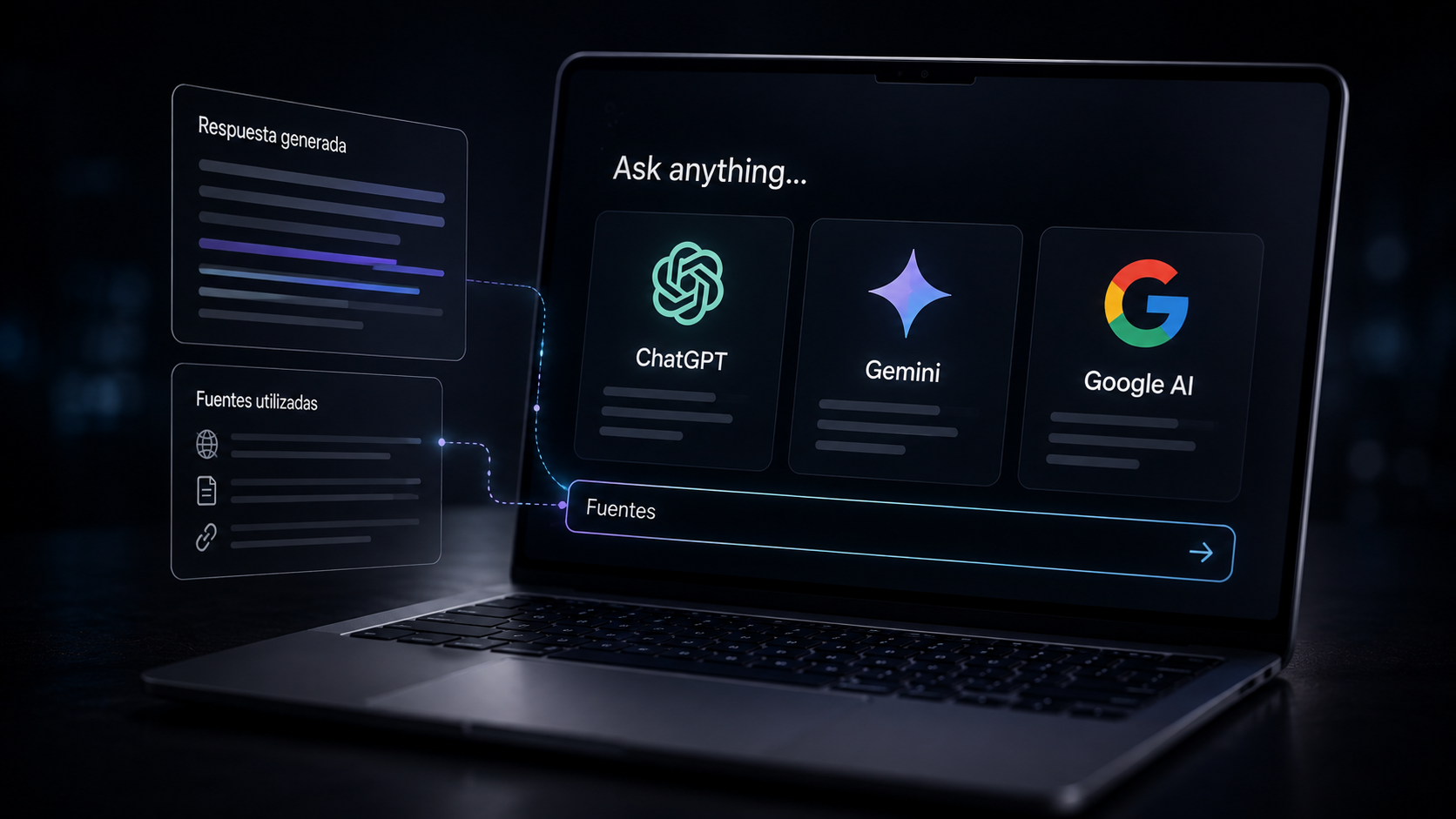
If multiple models with different architectures and training sources coexist, brand visibility across AI systems becomes more complex. Brands will need to consider open models and systems built on them, each with its own criteria for citing and recommending sources.
What businesses should do
1. Avoid one-provider dependency
Relying entirely on one platform creates risks around price, flexibility and data control.
2. Watch regulation
Rules for open and closed models will shape AI cost and accessibility for years.
3. Monitor different models
As with ChatGPT and Gemini, brands should understand how open models position them.
Daniel Antúnez is the founder of RomaLatam, an agency specialized in brand positioning and optimization for generative engines (GEO).